In response to a troubling surge in road traffic deaths, the Government of Ghana has announced a new strategy aimed at improving road safety through legislative reform and cross-sector collaboration.
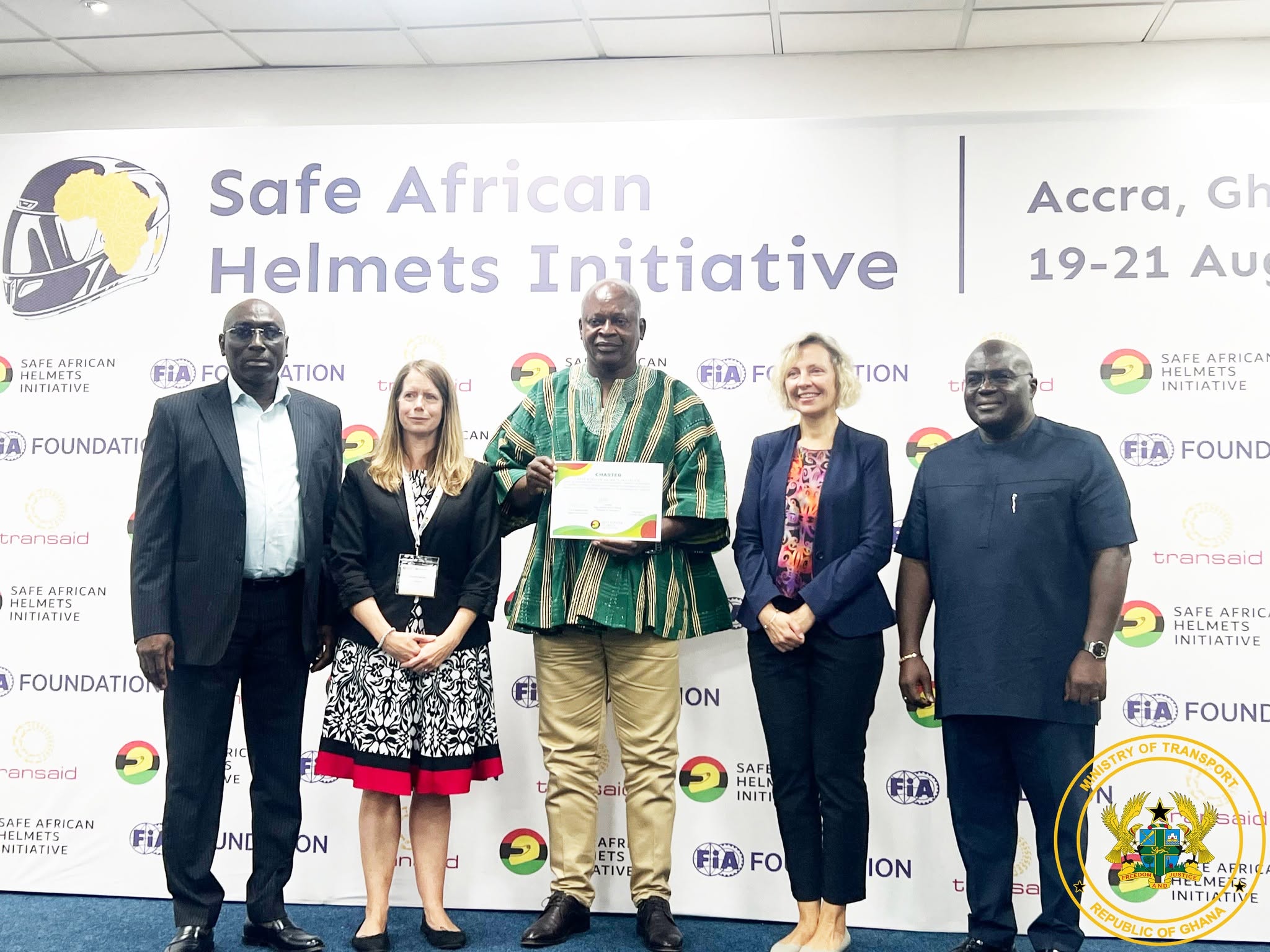
At the annual Bloomberg Philanthropies Initiative for Global Road Safety meeting held in Accra, the Chief Director of the Ministry of Transport, Mrs. Mabel Sagoe, outlined the government's proactive efforts to tackle the crisis.
Speaking on behalf of the Sector Minister, Hon. Josphe Bukari Nikpe, she acknowledged the devastating human toll of road accidents, referencing recent tragedies that claimed the lives of sixteen (16) children and five (5) other individuals.
She emphasised that these incidents were not just statistics but profound losses that demanded immediate and decisive action.
Drawing on data from the National Road Safety Authority (NRSA), which identifies human behaviour as the leading cause of road crashes, she revealed that the Ministry is currently reviewing Ghana’s road traffic laws.
These legislative changes, according to her, aim to modernise the transport sector and address persistent safety challenges. The proposed revisions include legalising commercial motorcycles, lowering the driving age and promoting environmental responsibility by introducing vehicle emission testing.
She confirmed that these proposals have been submitted to the Cabinet and will soon be presented to Parliament, while agencies like the Driver and Vehicle Licensing Authority (DVLA) and the NRSA are already preparing for their strategic implementation.
The Chief Director stressed that government action alone is not sufficient to win the fight against road fatalities and underscored the importance of collaboration across all sectors to truly make our roads safer.
The urgency of the initiative is underscored by alarming statistics. In Accra, reported road traffic fatalities rose by 34% in 2024 compared to the previous year, mirroring a national trend. A breakdown of the victims revealed that 56% of fatalities were pedestrians, while motorcyclists accounted for 27%, and vehicle occupants made up 14%. The remaining 3% were cyclists. Most crashes occurred between 12 p.m. and 2 p.m.
Similarly, Kumasi mirrored a high percentage of pedestrian deaths, which accounted for 64% of all fatalities in 2024. Motorcyclist deaths were also a significant concern, comprising 24% of the total. The most dangerous time for crashes in Kumasi was between 4 p.m. and 10 p.m.
The Regional Technical Advisor for Africa at Vital Strategies, Dr. Raphael Awuah, who presented the findings, urged for proactive measures to reverse the trend.